In Jingfu it is listed first: Ptychopetalum olacoides, one hundred and fifty milligrams, the Amazonian open of Blend 2. The trade still calls it potency wood. The Tupi called it muira puama, and pau-homem, the man-wood. The Germans, later, potenzholz. Every language that met the tree reached for the same idea.
A small tree, a long decoction
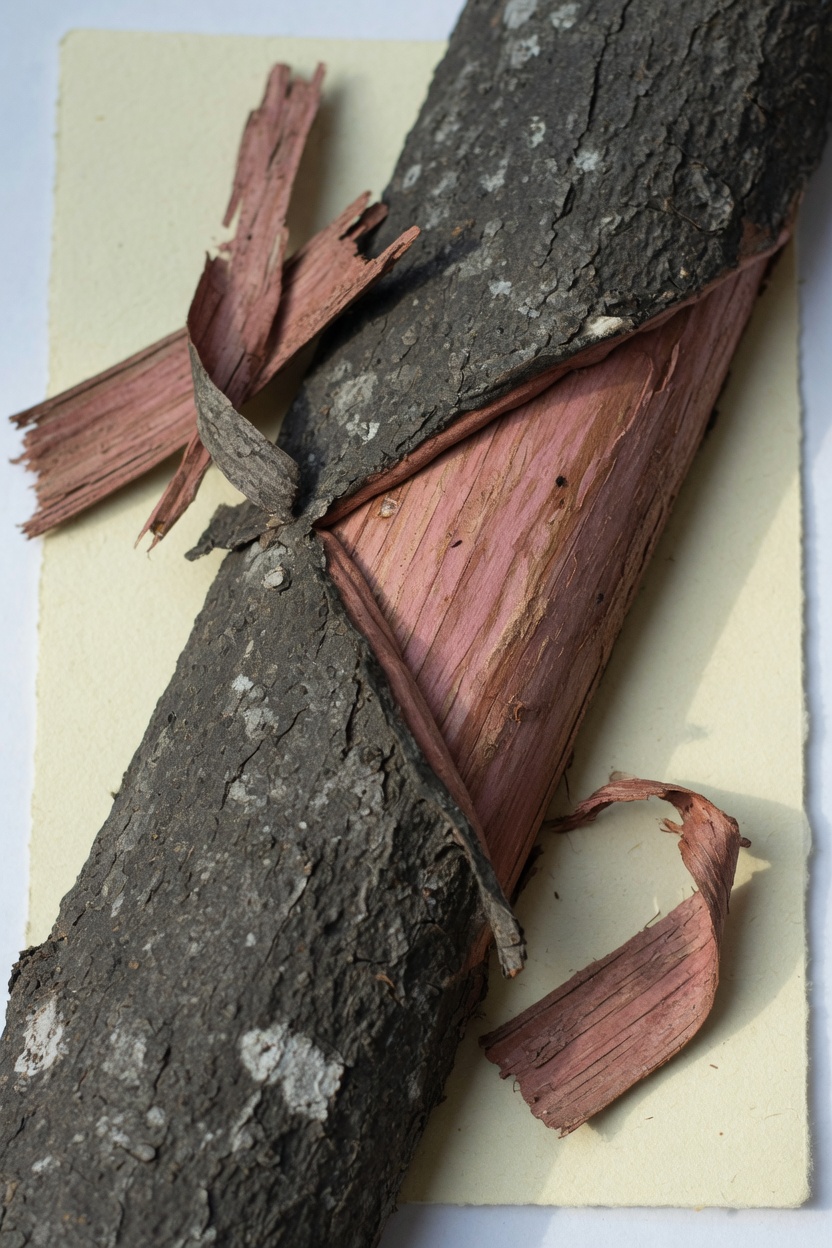
It is a modest Amazonian tree, four metres or so, family Olacaceae, native to the Brazilian forest and the neighbouring river countries. The part that travelled was not the leaf. It was the root and the bark of the stem, boiled as tea, steeped in alcohol, sometimes added to a bath. Indigenous communities used it as a tonic for tired nerves, for rheumatism, for the private failures that do not have a clinic name. In Guyana the root alone was kept for desire.
Europe noticed in the 1920s. Rudolpho Dias da Silva wrote it up. It entered the Brazilian Pharmacopoeia in that decade. Paris and London herbalists sold it as a nerve tonic with a reputation attached. The reputation did the selling. The plant did the quieter work: a decoction, a tincture, a bark you can still smell if you break it.
Not the same as catuaba
The two have been poured into the same bottle for a century. Catuama, the old Brazilian tonic, mixed guarana, ginger, Trichilia catigua, and this wood. Jingfu is a different sentence. Muira puama opens it. Catuaba closes it. Damiana, Siberian ginseng and arginine sit between. The hour, not the year.
Olacaceae. The alkaloid that took the tree's name is muirapuamine. The volatile oil of the root bark carries pinene, caryophyllene, camphor. We list the chemistry because it exists. We do not pretend a sachet is a trial.
Why it opens Jingfu
First plant in the first formula. Drive and presence. The wood, not the shortcut. Catuaba is the name that outlived its Latin. This is the wood that kept its name in every language that borrowed it.
This journal will keep one plate at a time. History first. The formula second. Claims last, and only the ones we can stand behind.
End of plate II.