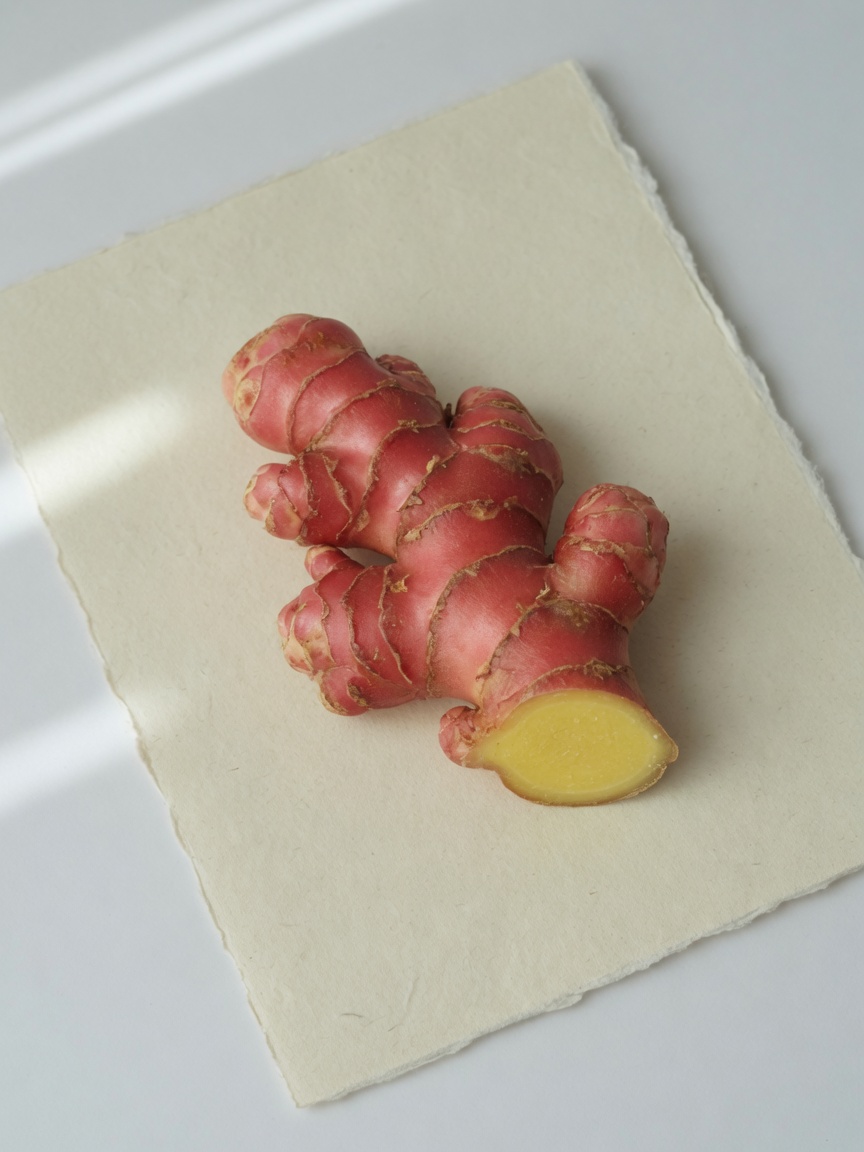
In Qifu it is twenty-five milligrams of red ginger, Zingiber officinale, listed first: warmth and circulation. The common plant no longer exists in the wild. It has been farmed for so long that it cannot seed itself. A crop that forgot how to live without us.
A kitchen plant, a ship plant
The Analects say Confucius ate ginger with every meal, though sparingly. Chinese ships carried it in pots. Faxian, in 406, noted it as a guard against scurvy. Dried ginger went north as tribute under the Tang. Arabs brought it to the Mediterranean. Dioscorides and Pliny both had it. Medieval Europe paid a sheep's price for a pound. The rhizome travelled because it keeps, and because heat is a kind of medicine that kitchens already understood.
Red ginger, var. rubrum, is the form Qifu uses. Indonesia and Malaysia grew it more as a remedy than as a spice: a darker skin, a hotter manner. Same family as turmeric and cardamom. Same job the old books gave the pale rhizome: to warm what has gone cold.
What we do not ask of it
Aphrodisiac catalogues followed the spice the way they follow every travelling plant. We leave that on the quay. Ginger in this house is a small dose at the front of a daily formula. Circulation. Warmth. A messenger herb, as the Chinese prescriptions had it: the plant that helps the others arrive.
Zingiberaceae. Gingerols in the fresh rhizome, shogaols as it dries. Red ginger carries extra colour in the skin. Twenty-five milligrams is a kitchen amount, not a pharmacy one. That is the point.
Why it opens Qifu
First active in the daily vitality. A plant that has been in the bowl and in the chest for as long as writing. Jingfu does not need it. The week does. Heat, then the slower roots.
This journal will keep one plate at a time. History first. The formula second. Claims last, and only the ones we can stand behind.
End of plate VIII.